Health and Safety Policy for Man With Van Bermondsey
 At Man With Van Bermondsey, health and safety is central to every move we carry out. Our aim is to protect staff, customers, property, and the public by applying practical controls before, during, and after each job. A safe working approach reduces disruption, prevents damage, and supports a reliable service. This policy outlines the standards we follow when providing a man with van service, including manual handling, vehicle safety, equipment use, and site awareness. We expect all team members to work responsibly, speak up about hazards, and follow the procedures set out below.
We recognise that moving furniture, boxes, and household items can present risks if tasks are rushed or planned poorly. For that reason, we assess each assignment in advance and consider access routes, load weights, fragile goods, and environmental conditions. Our approach is built around prevention, communication, and careful handling. Every member of our van moving team is expected to act with attention and to report concerns before they become incidents.
 This policy applies to all aspects of our operations, including loading, unloading, transit, lifting, carrying, stacking, and temporary storage on-site. It also applies to the use of dollies, straps, blankets, gloves, and other support equipment. Everyone working under the Man With Van Bermondsey name must understand that safety is not optional; it is part of the service standard.
Our Core Health and Safety Principles
We aim to create a working environment where risks are identified early and managed sensibly. This includes keeping walkways clear, using proper lifting techniques, and avoiding unnecessary strain. We also encourage all staff to remain alert to hazards such as wet floors, poor lighting, uneven surfaces, loose packaging, and unstable loads. If a task cannot be completed safely, it must be paused until suitable controls are in place.
All van load safety procedures are based on suitability and control. Items are grouped by size and fragility, with heavier objects placed low and secured to prevent movement. We avoid overfilling vehicles, and we never permit unsafe stacking that could collapse in transit. Where necessary, team members may split a load into smaller sections to maintain stability and reduce physical strain.
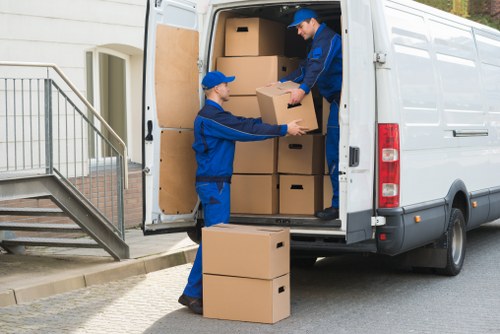 For moving day safety, we encourage clear communication between the crew and the customer so that expectations are understood. If an item is unusually heavy, awkward, or valuable, it should be flagged before handling begins. This helps our team decide whether additional manpower, specialist packaging, or extra protective measures are required. A good moving van safety practice is one that combines planning with flexibility.
Responsibilities of Staff and Management
Management is responsible for making sure all workers are competent, briefed, and equipped to perform their duties safely. This includes providing suitable training in manual handling, vehicle checks, hazard recognition, and emergency response. Supervisors must also ensure that vehicles are roadworthy, equipment is in good condition, and any reported defects are addressed promptly.
Staff members must take reasonable care for their own safety and the safety of others. They should use the correct lifting posture, request assistance when needed, and avoid carrying items that exceed safe limits. Good judgement is essential in a man and van safety environment, especially when navigating stairs, tight corners, or restricted access areas. No employee should feel pressured to complete a task in an unsafe way.
Customers also play a part in maintaining a safe environment. We ask that items be packed securely, pathways be kept free of obstructions where possible, and pets or children be supervised away from work zones. Cooperation on these practical points helps support a safer removal van safety process and reduces the chance of accidental injury or damage.
Vehicle, Equipment, and Loading Controls
Before each journey, vehicles should be checked for tyre condition, lights, mirrors, fuel levels, and general roadworthiness. The load space must be clean, dry, and free from loose debris that could cause slipping. Equipment such as straps, blankets, and trolleys should be inspected regularly so that only safe, serviceable items are used. Any fault must be reported immediately.
Loading and unloading are among the highest-risk parts of the job, so our team follows a structured approach. Heavier items are handled by more than one person when needed, and fragile belongings are wrapped and separated to reduce impact. We use careful placement to stop movement during transit, and we secure loads so that sudden braking or cornering does not lead to shifting. This is an important part of van moving service safety.
We also consider weather conditions, particularly rain, ice, heat, and reduced visibility. In poor conditions, extra caution is required on ramps, steps, and vehicle surfaces. Team members should wear appropriate footwear and clothing to reduce slips and to support safe movement. If conditions become too severe, work should be adjusted or delayed until it can be completed safely.
Incident Reporting and Emergency Response
 If an accident, near miss, or unsafe condition occurs, it must be reported as soon as possible. Prompt reporting allows the issue to be assessed, recorded, and prevented from happening again. Minor injuries should be treated quickly, while more serious incidents may require emergency services and a full internal review. Accurate records help us improve future safety performance.
In the event of a fire, collision, injury, or vehicle breakdown, staff must follow calm and practical emergency procedures. This includes making the area safe where possible, alerting the relevant people, and avoiding further exposure to danger. Our health and safety policy is designed to keep responses simple, direct, and effective. Regular reviews help us update our procedures so they remain suitable for the type of work we do.
We also monitor repeated issues, such as recurring lifting strain, damaged packaging, or access problems. By identifying patterns, we can take action before risks become larger problems. A consistent moving safety policy supports both efficiency and wellbeing, ensuring that every job is carried out with the same standard of care.
Review, Training, and Ongoing Improvement
 This policy is reviewed regularly to ensure it remains effective, practical, and aligned with the way our operations are carried out. We update our procedures when new risks are identified, when equipment changes, or when lessons are learned from incident reports. Health and safety is a continuous responsibility, not a one-time checklist.
Training is refreshed so that team members stay confident in safe lifting, load securing, and hazard awareness. We encourage a culture where concerns are raised early and improvements are welcomed. By maintaining high standards across every move, Man With Van Bermondsey supports safer working conditions, better protection for property, and a more dependable service overall.
Our commitment is simple: to deliver a professional man with van experience that places safety at the centre of every decision. Through preparation, communication, and consistent controls, we aim to reduce avoidable risk and uphold a responsible standard of care on every assignment.